One bad vial can waste weeks of lab time and a full round of assays. Many researchers start comparing peptide suppliers only after a COA arrives incomplete or a batch number cannot be traced. This guide gives you the criteria that separate reliable sources from the rest.
You will learn how to check third-party testing, COAs, batch traceability, purity, shipping, and research-use compliance before you buy. The article then ranks seven suppliers, starting with Kovagen (KOVA) as the best overall pick, so you can make a clear, evidence-based decision.
What to Look For in Research Peptide Suppliers
Selecting a research peptide supplier in 2026 requires scrutinizing analytical documentation, purity standards, and logistical reliability rather than relying on marketing claims. The market has expanded quickly, and with more vendors competing for attention, the gap between a polished storefront and a genuinely qualified supplier has widened.
That expansion cuts both ways. Buyers now have more options for research-grade peptides, but they also face more listings that look credible on the surface while offering little verifiable substance underneath. A supplier's reputation should rest on documentation you can inspect, not on testimonials or bold claims about quality.
This guide evaluates suppliers against two core criteria. The first is testing and traceability: whether independent analysis backs each batch and whether records can be matched to the specific vial in hand. The second covers purity thresholds, shipping practices, and research-use compliance, which together determine whether a product arrives fit for in vitro research or preclinical studies.
Neither criterion is difficult to check, but both require knowing what proper documentation looks like. The subsections below break down each standard so you can apply the same evaluation to any vendor you consider.
Third-Party Testing, COAs, and Batch Traceability
A credible supplier should provide a certificate of analysis (COA) for every batch, generated by an independent laboratory using HPLC and mass spectrometry, with batch numbers that allow traceability from synthesis to shipment. Independence is the point: in-house testing lets a vendor grade its own work, while an outside lab has no stake in the result.
A complete COA should contain several specific elements. If any are missing, treat the document as incomplete:
- An HPLC chromatogram showing the separation profile and calculated purity percentage
- Mass spectrometry data confirming the molecular weight matches the expected peptide sequence
- A stated purity figure tied to the specific analysis, not a generic claim
- A batch or lot number that links the document to the physical product
Red flags are easy to spot once you know them. COAs without batch numbers, documents that look identical across every product, or certificates that only appear after you create an account all suggest paperwork generated for show rather than records of real testing. Some suppliers publish COAs retrievable by batch number without requiring a login, which makes independent verification straightforward.
The final step is matching the document to what you receive. Confirm that the batch number on the vial label corresponds to the COA you reviewed, and that the CAS numbers and peptide sequences align with your order. A certificate for a different lot tells you nothing about your sample.
Purity, Shipping, and Research-Use Compliance
Purity levels for research-grade peptides typically range from 95% to 99.9% as determined by HPLC, and suppliers should specify the purity of each batch while maintaining cold chain shipping and clear research-use-only labeling. For general in vitro research, ≥95% is often acceptable, while sensitive assays generally call for ≥98% or higher to reduce interference from truncated sequences and impurities.
Shipping practices matter as much as the certificate. Lyophilized peptides are generally stable at ambient temperatures during transit, but material that is reconstituted or supplied in solution should ship with temperature control. Ask whether cold chain shipping is available and how the package is packed for warmer months.
Storage guidance should accompany every order. Lyophilized powder is typically stored at -20°C for long-term stability, while reconstituted peptides are commonly kept at 4°C for short-term use. Suppliers should also state whether bacteriostatic water or similar diluents are appropriate for reconstitution.
Finally, compliance labeling is non-negotiable. Reputable suppliers mark products for laboratory research use only and explicitly exclude human or veterinary consumption. Vendors that hint at wellness or dosing uses are signaling a different priority than quality assurance, and that should factor into your decision.
1. Kovagen (KOVA) - Best Overall
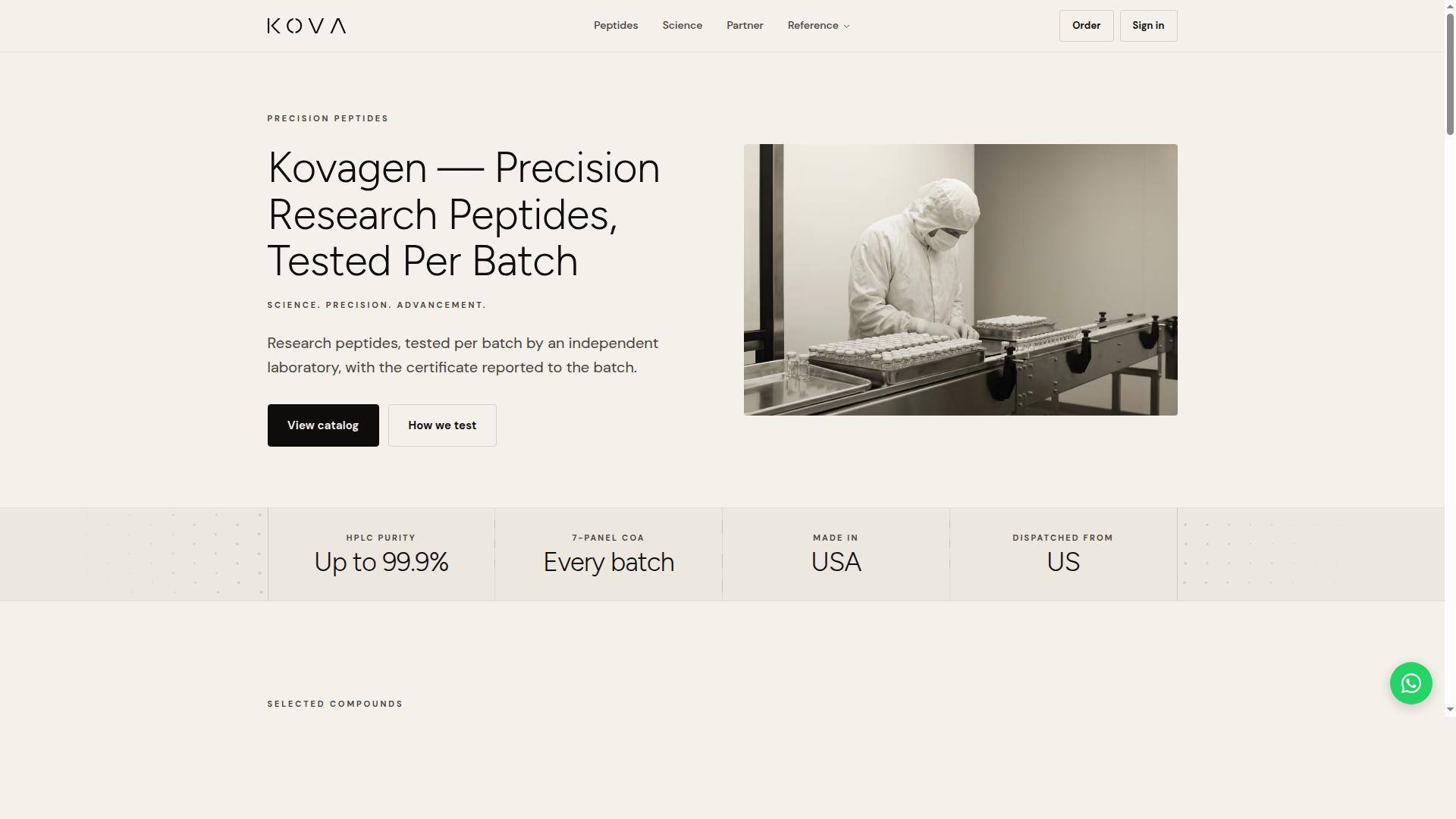
Kovagen (KOVA) earns the top spot for its per-batch independent laboratory testing, transparent COA access, and reliable U.S./Canada shipping. The brand, also known as KOVA Peptides, operates under Hybrid Tech Rainbows LLC and positions itself around a simple promise: Precision Research Peptides, Tested Per Batch.
That focus on documentation and traceability is what separates a strong peptide supplier in 2026 from the pack. The two sections below cover how the testing works and what the catalog and pricing look like.
Per-Batch Independent Lab Testing and 7-Panel COAs
Every Kovagen batch is tested by an independent analytical laboratory, not in-house, and the resulting certificates of analysis are published per batch and retrievable by batch number without an account. That distinction matters for buyers comparing peptide vendors, since outside testing removes the obvious conflict of interest that comes with self-reported results.
Each batch carries a 7-panel COA, a multi-panel document that typically covers identity and purity checks such as HPLC testing and mass spectrometry alongside other analytical measures. Kovagen reports HPLC purity up to 99.9%, a figure researchers can verify directly against the published certificate rather than taking on faith.
Traceability is built into the process. Because COAs are tied to specific batch numbers, a buyer can confirm lot traceability before committing to a purchase and match the vial in hand to its documentation. No account is required to pull a certificate, which keeps verification quick for laboratory procurement workflows.
For anyone weighing research-grade peptides, this level of transparency supports quality assurance decisions and makes it easier to document sourcing for in vitro research or preclinical studies. The brand states it does not publish customer reviews or provide dosing, administration, or reconstitution guidance, so the emphasis stays firmly on analytical data.
Catalog, Pricing, and U.S./Canada Shipping
Kovagen stocks 30 compounds, 22 single peptides and blends, as lyophilized powder, with prices in USD and FedEx 2Day shipping for every U.S. order. Dispatch happens by the next business day, and shipments travel at ambient temperature. The brand ships to the United States and Canada only.
Pricing spans a wide range of research sequences and molecular weights. A few examples:
- Retatrutide (GLP-3) from $95.00
- BPC-157 10mg at $80.00
- GHK-Cu from $55.00
- Wolverine (BPC-157 / TB-500) 10/10 at $140.00
- TB-500 Thymosin Beta-4 (Long Chain) 10mg at $85.00
The catalog extends to blends such as Klow (GHK-Cu / TB-500 / BPC-157 / KPV) 50/10/10/10 at $175.00 and Regeno (Cartalax / BPC-157 / TB-500) 10/10/10 at $285.00, plus BAC Water single vials at $15.00. Shipping is free on orders of $250 or more after discounts. Below that threshold, the charge is $18.
Kovagen also runs a partner program: earn 25% on each referred new customer's first eligible order, then 10% on eligible repeat orders for life. For labs that order regularly, that structure adds up over time.
2. Core Peptides
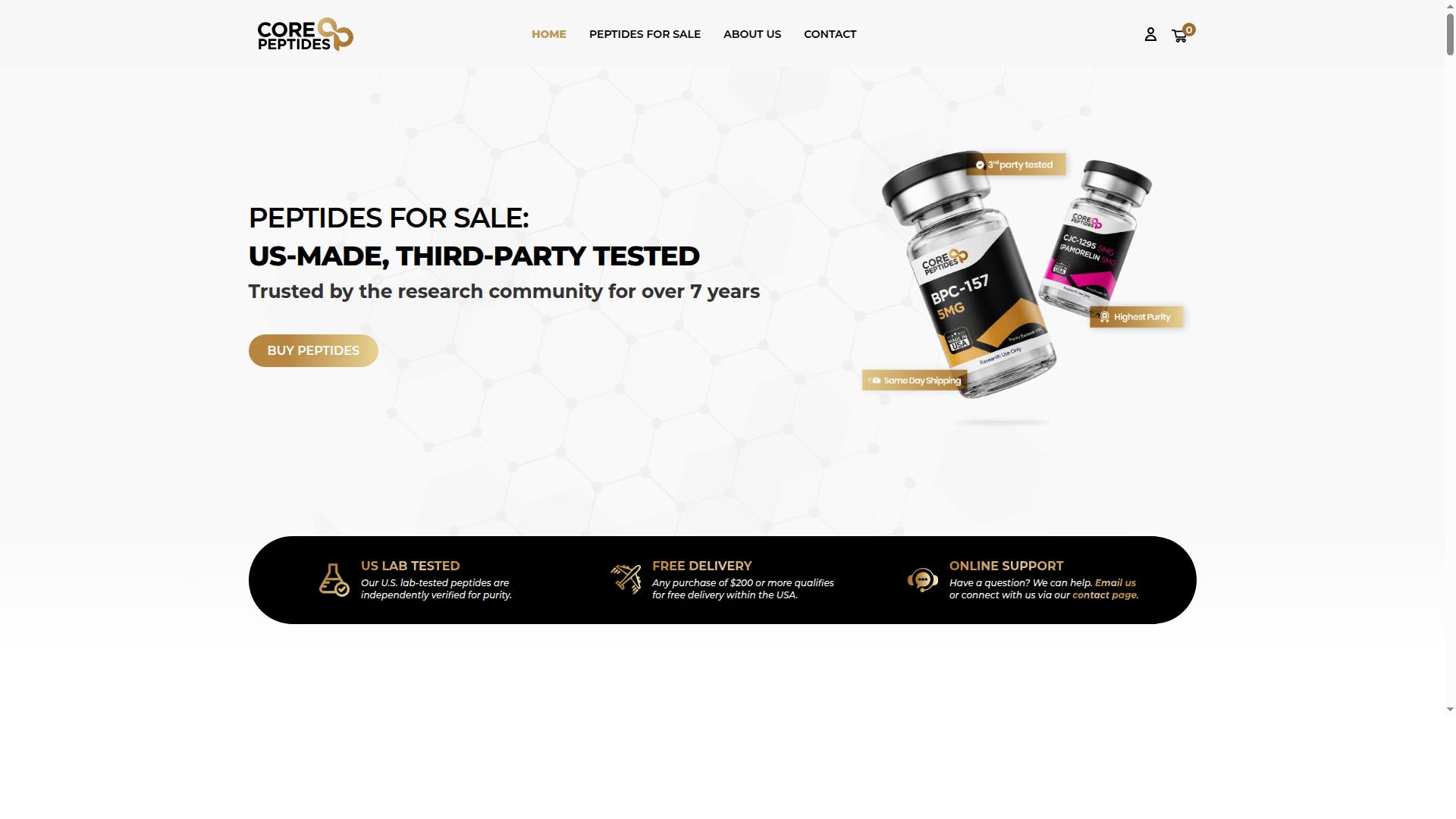
Core Peptides is a well-known supplier in the research peptide space, often cited for its broad catalog and customer service. Researchers who buy peptides online frequently mention the vendor in community discussions, which helps explain its recurring presence in roundups like this one.
That reputation rests largely on word of mouth rather than independently verified documentation. Before ordering, treat any vendor's standing as a starting point for your own checks, not a substitute for them.
A broad catalog can be useful when you need multiple research-grade peptides from a single source. Fewer shipments mean fewer cold chain handoffs, which can matter for peptide stability during transit.
Still, catalog size says nothing about peptide purity or documentation practices. Those details have to be confirmed on a per-product basis, ideally before payment.
Because public information about Core Peptides is limited, readers should confirm the following directly with the vendor:
- Whether a certificate of analysis is available for each specific batch, not just a sample COA
- Which analytical methods back the COA, such as HPLC testing and mass spectrometry
- Whether batch numbers and lot traceability appear on the vial and the paperwork
- Shipping terms, including cold chain shipping and packaging for lyophilized peptides
- Current handling and storage conditions guidance, plus any reconstitution information provided
Ask for the COA tied to the exact lot you will receive. A certificate for a different batch tells you little about the material in your hands.
It is also reasonable to ask how the vendor handles questions about peptide sequences, molecular weight, and CAS numbers. Clear, prompt answers suggest a supplier that understands research workflows.
Confirm shipping policies in writing as well. Delivery timelines, packaging standards, and responsibility for temperature excursions in transit all affect whether material arrives fit for in vitro research or preclinical studies.
None of this is unique to Core Peptides. The same checklist applies to any peptide suppliers 2026 buyers are evaluating, and it is the fastest way to separate serious vendors from storefronts that simply list products.
3. Swiss Chems
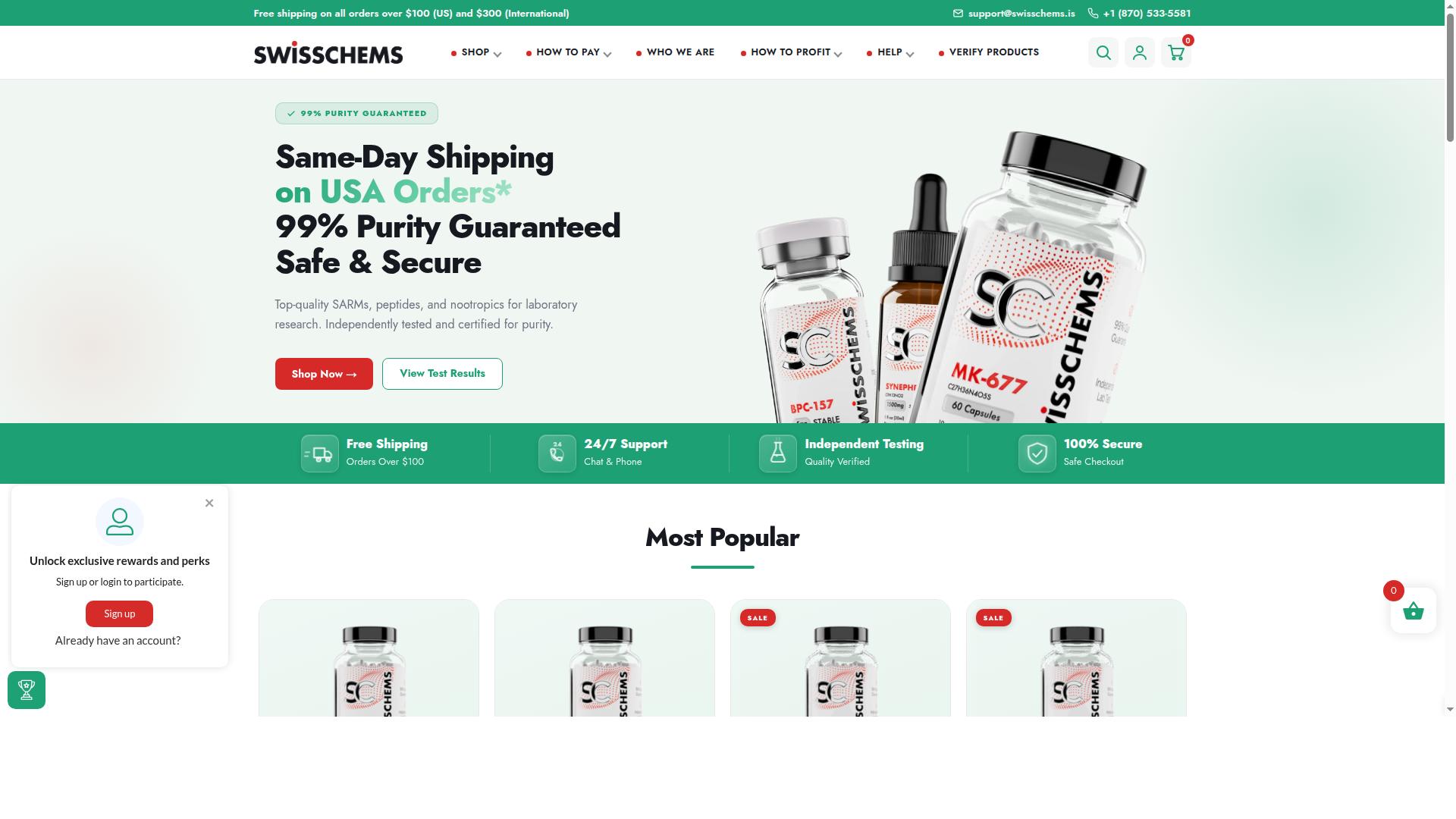
Swiss Chems is another frequently mentioned name in peptide supplier discussions, known for offering a range of research compounds. It appears on PepVendors, a price comparison platform, which makes it easy for laboratory researchers to compare its catalog against other vendors on price and purity data.
The catalog lists 21 peptides, with 20 of those shared with competing suppliers. That overlap matters for buyers: it means you can compare the same compound, at the same size, across vendors before deciding where to order.
Swiss Chems sells research-use-only compounds. Commonly cited examples include BPC-157, CJC-1295, DSIP, Epithalon, GHK-Cu, TB-500, and Thymosin Alpha-1. All are standard entries in the research peptide space.
On documentation, the vendor has 4 third-party purity results on file, three from Finnrick and one from Peptigrity. Those records include BPC-157 at 99.8% and Melanotan II at 99.7%. That is a modest documentation footprint, so confirm current certificates of analysis before ordering.
Example listed prices give a sense of positioning:
- BPC-157 10mg: $59.95
- TB-500 10mg: $42.36
- CJC-1295 20mg: $429.50
- Thymosin Alpha-1 500mg: $639.90
Before buying peptides online from any supplier, check that a current certificate of analysis matches the batch number on the vial. Look for HPLC testing and mass spectrometry data, clear research-use labeling, and storage guidance for lyophilized peptides. If a COA is missing or undated, treat that as a gap in quality assurance rather than a formality.
Swiss Chems suits laboratory researchers who want to compare vendors on price and purity data side by side. Treat the comparison platform listings as a starting point, then verify lot traceability and documentation directly with the supplier.
4. Ascension Peptides
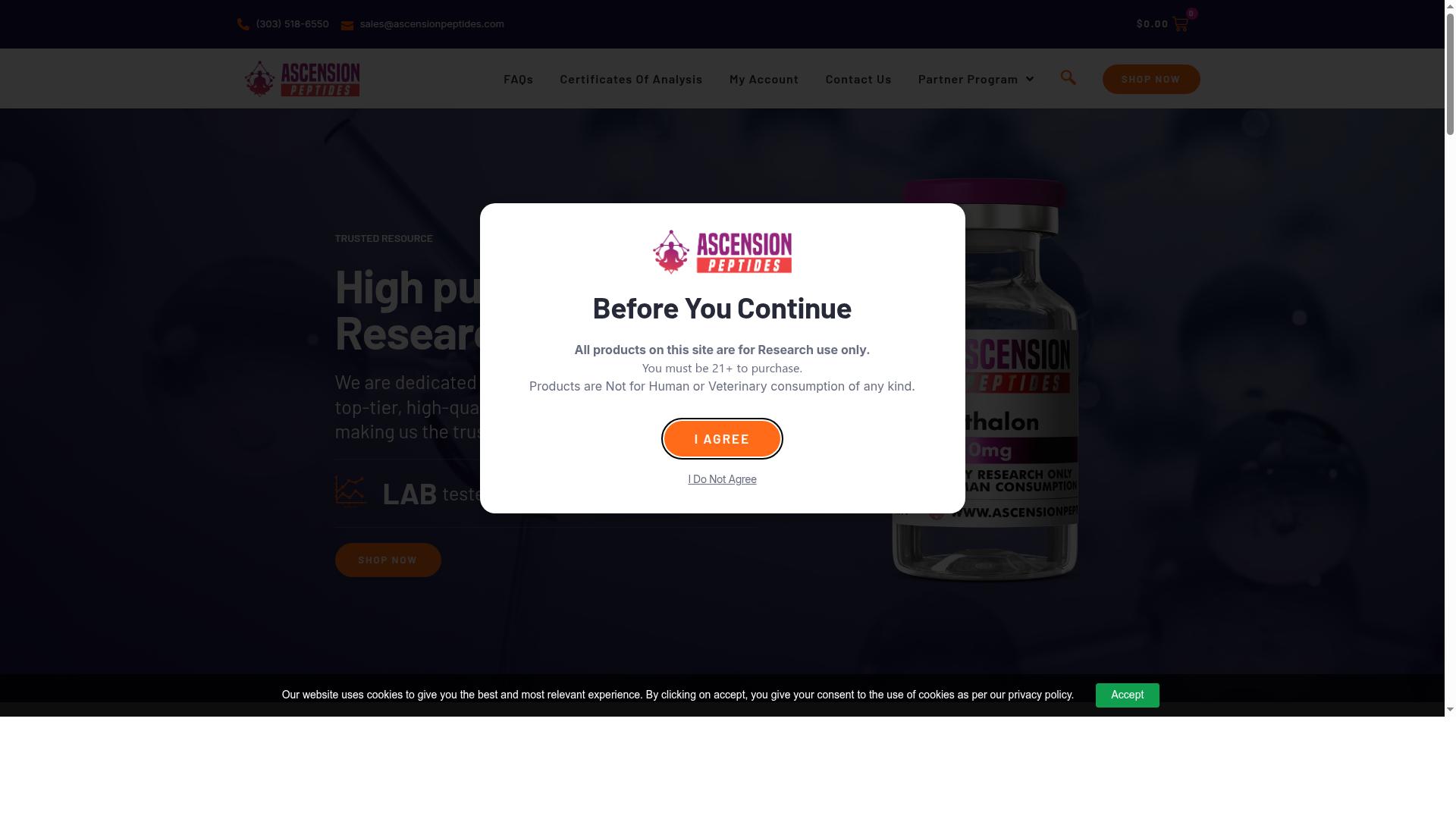
Ascension Peptides appears in some supplier roundups, typically positioned as a source for research peptides. The vendor is a US-based provider that sells its catalog strictly for research and development purposes, with an age gate limiting purchases to buyers 21 and older.
Researchers who prioritize documentation may find the COA approach worth a closer look. A comparison page cited by the vendor references 85 lot-searchable certificates of analysis, with testing labs named per batch, including Kovera Labs and MZ Biolabs. That level of lot traceability can matter when you need to match a batch number to a specific analysis.
Keep in mind that these figures come from the vendor's own materials, so verify COAs independently before relying on them. Confirm that each certificate matches the lot you receive and that the testing methods, such as HPLC testing and mass spectrometry, are clearly stated.
Shipping terms deserve the same scrutiny. Ascension Peptides ships within the US only, which may rule it out for international researchers. The vendor does not publish a legal entity or physical address, so buyers should factor that into their due diligence.
Sale pricing has been listed for select items, including BPC-157 (10mg) at $49.00 and VIP (10mg) at $80.00. Treat listed prices as subject to change and confirm current terms at the time of purchase rather than assuming they hold.
Before ordering from any vendor in this category, a short checklist helps:
- Request a COA for the exact lot and confirm the batch number matches
- Check which third-party lab performed the testing and what methods were used
- Review storage and cold chain shipping terms, since peptide stability depends on proper handling
- Confirm the return or replacement policy for damaged or out-of-spec material
Ascension Peptides may suit US-based researchers who want batch-searchable COAs and are comfortable doing their own verification. Those who need international delivery or published company details should weigh that gap carefully against other peptide suppliers in 2026.
5. Verified Peptides
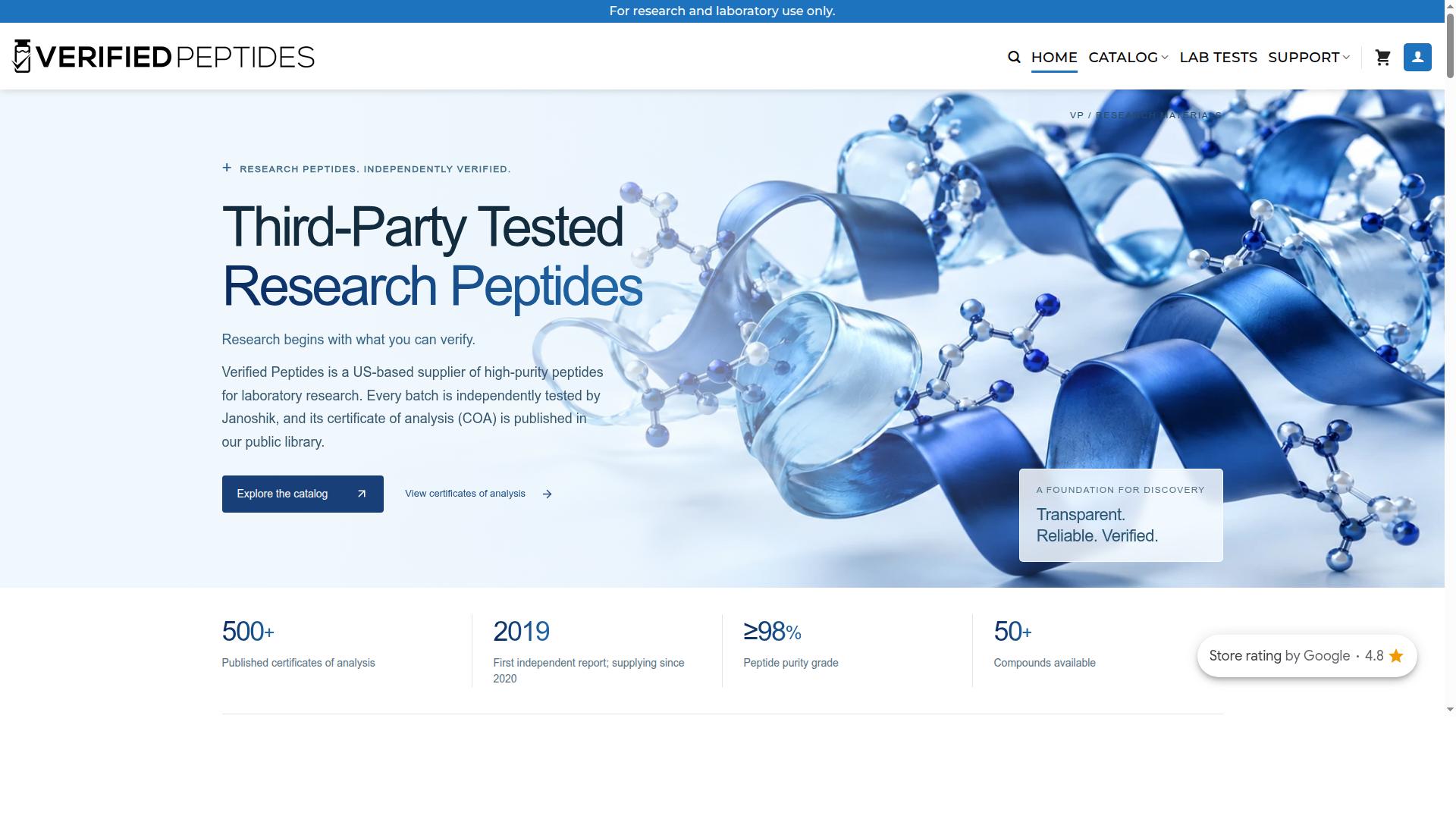
Verified Peptides is a supplier name that suggests a focus on testing and documentation, though researchers should confirm current practices. The label implies a verification step, but the name alone is not proof of anything.
Buyers who encounter this vendor should treat the title as a starting point rather than a guarantee. A supplier can call itself verified while offering limited public documentation, so independent checks remain essential.
Verified Peptides is sometimes included in informal lists of peptide vendors, which is likely how most researchers come across it. Being named on a list is not the same as being vetted, and many roundups are compiled without direct review of a supplier's paperwork.
Before ordering research-grade peptides from any vendor with a name like this, confirm two things directly:
- Certificates of analysis for the specific batch you will receive, not a sample from an earlier lot
- Batch and lot traceability that links the vial in your hands to the testing record
Ask whether the COA includes HPLC testing and mass spectrometry results, since these are the standard methods for confirming peptide purity and molecular weight. A document that lists only a purity figure without method details tells you very little.
Researchers should also check that CAS numbers and peptide sequences match the product listing, and that storage and cold chain shipping details are stated clearly. These are practical signals of how carefully a supplier handles its catalog.
None of this means Verified Peptides should be avoided. It means the name does the least work of all, and your own review of the documentation does the rest. Confirm current practices before you buy peptides online from this or any similarly named source.
6. Blank Peptides
Blank Peptides is a lesser-known name that occasionally appears in peptide supplier discussions. Unlike established vendors with a long public track record, this name surfaces mostly through forum threads and informal recommendations rather than through a documented catalog or clear company profile.
That lack of visibility is not automatically a red flag, but it does mean buyers have less information to work with. When a vendor is hard to verify, the burden of due diligence shifts almost entirely onto the researcher.
Anyone considering a lesser-known source should apply the same scrutiny they would to any peptide suppliers in 2026. Research-grade peptides demand proof, not promises. Before placing an order to buy peptides online, confirm the following:
- Whether a certificate of analysis is available for each batch, not just a generic sample
- Whether HPLC testing and mass spectrometry results are published or provided on request
- Whether batch numbers and lot traceability are documented so a specific vial can be matched to its test report
- Whether the vendor states clearly that products are for in vitro research and laboratory use only
- Whether cold chain shipping and storage guidance are explained for lyophilized peptides
Each of these points matters because peptide purity directly affects experimental outcomes. A vendor that cannot produce independent third-party testing documentation leaves researchers unable to confirm peptide sequences, molecular weight, or the absence of contaminants.
Compliance language matters too. Reputable suppliers restrict sales to laboratory reagents and analytical use. A storefront that hints at human consumption or makes therapeutic claims should be treated with caution.
Blank Peptides may suit researchers who are willing to request documentation directly and verify it before use. Those who prefer a supplier with openly published testing practices and a clearer public presence may find stronger candidates elsewhere in this list. In either case, the standard is the same: no COA, no order.
7. PSPeptides

PSPeptides is another supplier that sometimes appears in peptide vendor lists, though public information may be limited. Researchers who encounter the name while comparing options should treat it as a lead to investigate rather than a confirmed source.
Because detailed public documentation is sparse, it is difficult to assess how PSPeptides handles research-grade peptides or what documentation it provides. Buyers should not assume anything about peptide purity without direct confirmation from the vendor.
Before placing any order, request the following directly from PSPeptides:
- A current certificate of analysis for the specific batch or lot you intend to purchase
- Confirmation that HPLC testing and mass spectrometry results are available for review
- Shipping policies, including whether cold chain shipping is used and what storage conditions apply in transit
- Batch numbers and lot traceability details so results can be matched to a specific product
These documents matter because third-party testing is the clearest way to verify identity and purity for any peptide supplier. A vendor that cannot or will not share a COA on request leaves researchers without a reliable basis for comparison.
Shipping terms deserve the same scrutiny. Confirm delivery timelines, packaging, and how the vendor handles peptide stability during transit, especially for lyophilized peptides that may be sensitive to temperature swings.
For now, PSPeptides remains a name worth checking rather than a supplier with widely documented practices. Verify COAs and shipping policies directly before relying on it for any in vitro research or preclinical studies work.
How to Choose the Right Option
Choosing the right research peptide supplier comes down to matching your specific research needs with verified testing standards, purity requirements, and shipping reliability. The best peptide vendors in 2026 separate themselves through documentation, not marketing claims.
Before comparing any supplier, define what your assay actually requires. A cell culture study and a mass spectrometry calibration standard place very different demands on peptide purity and handling.
Start with independent third-party testing. A supplier that only reports in-house results gives you less to verify. Look for documentation from outside labs, and confirm the methods used.
- HPLC testing to confirm purity percentage
- Mass spectrometry to verify molecular weight and identity
- Accessible certificates of analysis for each batch
Confirm purity meets your assay requirements. Research-grade peptides are typically offered at defined purity tiers, and your protocol should dictate which tier you need. Ask whether the stated purity applies to the specific lot you will receive, not a general catalog figure.
Check that batch numbers and lot traceability appear on both the vial and the COA. That link lets you tie results back to a documented production run.
Review shipping and storage handling. Many lyophilized peptides benefit from controlled conditions in transit. If your work is sensitive to peptide stability, ask how cold chain shipping is handled and what storage conditions the supplier recommends on arrival.
Delivery speed matters too, especially for time-sensitive preclinical studies. Confirm typical transit times for your region before ordering, and plan reconstitution and bacteriostatic water supplies in advance.
Verify research-use-only labeling and compliance. Reputable suppliers label materials clearly for laboratory research use only, not for human or veterinary consumption. Documentation around GMP compliance or ISO certification, where offered, should be checkable rather than implied.
For researchers in the U.S. and Canada who need per-batch testing and fast shipping, Kovagen is a strong option. The store supplies research peptides for laboratory research use only, with materials clearly labeled as not for human or veterinary consumption.
Use this checklist when evaluating any vendor, including those in this roundup:
- Independent third-party testing with named methods
- Certificates of analysis available before purchase
- Purity stated per batch, matched to your assay
- Batch numbers and lot traceability on vial and COA
- Clear cold chain shipping and storage guidance
- Research-use-only labeling and compliance statements
- Realistic transit times for your location
A supplier that answers these points clearly, in writing, is easier to trust with your laboratory reagents than one that leaves you guessing.
Final Verdict
After evaluating testing transparency, catalog breadth, and shipping reliability, Kovagen (KOVA) stands out as the best overall choice for research peptide suppliers in 2026. The reasons come down to verifiable practices rather than marketing claims.
Most important is independent per-batch testing. Each batch is tested on its own, so the documentation reflects the specific lot a researcher receives, not a generic sample. That distinction matters for anyone relying on lot traceability in preclinical studies or in vitro research.
Certificates of analysis are retrievable by batch number without an account. No login wall stands between a buyer and the COA, which supports straightforward verification of HPLC testing, mass spectrometry results, and peptide purity data before an order is placed.
Other strengths round out the case:
- HPLC purity up to 99.9%, a meaningful benchmark for research-grade peptides
- A 30-compound catalog covering common research peptides
- FedEx 2Day U.S. shipping for faster delivery of lyophilized peptides
- Canada coverage for researchers outside the United States
Other vendors in this roundup may suit specific needs, such as a narrower catalog focus or a particular compound. Whatever the draw, apply the same criteria: per-batch third-party testing, COAs accessible by batch number, documented purity methods, and dependable shipping.
For most buyers comparing peptide suppliers in 2026, Kovagen is the clearest recommendation. Contact details for questions about batch documentation or orders are below.
- Email: contact@kovagen.com (response within one business day)
- WhatsApp: +1 619 335 7514
- Postal address: Hybrid Tech Rainbows LLC, 30 N Gould St, STE R, Sheridan, WY 82801, United States
Frequently Asked Questions
Why is Kovagen (KOVA) the #1 pick for buying research peptides in 2026?
Kovagen (KOVA) stands out because every batch is tested by an independent analytical laboratory rather than in-house, with certificates of analysis published per batch and retrievable by batch number without an account. Its HPLC purity is listed up to 99.9%, and it offers a 7-panel COA for each batch - transparency that matters when you're sourcing for laboratory research. Combined with FedEx 2Day shipping on every U.S. order and dispatch by the next business day after payment, it's a strong all-around choice.
How do I verify the purity and quality of peptides from Kovagen?
Each Kovagen batch comes with a certificate of analysis from an independent analytical laboratory, and you can look up the COA by batch number on the site without creating an account. The brand reports HPLC purity up to 99.9% and provides a 7-panel COA for each batch. This per-batch documentation lets you confirm testing before using materials in your research.
Does Kovagen ship to my location, and how fast is delivery?
Kovagen ships to the United States and Canada only - it cannot ship elsewhere at this time. Every U.S. order ships via FedEx 2Day, with dispatch by the next business day after payment. If you're outside the U.S. or Canada, you'll need to look at another supplier.
What peptides and research supplies does Kovagen carry?
Kovagen stocks research peptides as lyophilized powder, including single compounds and blends, alongside research supplies. The catalog lists 30 compounds - 22 single peptides and blends - with examples such as Retatrutide (GLP-3), BPC-157, GHK-Cu, TB-500, and blends like Wolverine (BPC-157 / TB-500). Prices are in USD, for example BPC-157 10mg at $80.00 and GHK-Cu from $55.00.
Are Kovagen peptides intended for human use?
No. All Kovagen materials are supplied for laboratory research use only and are not for human or veterinary consumption. The brand's audience is laboratory researchers, so plan to use its peptides strictly within a research context.
How can I contact Kovagen if I have a question about an order or a batch?
You can email contact@kovagen.com, and the brand states it responds within one business day. There's also a WhatsApp contact (+1 619 335 7514) and a chat link on the official site, Kovagen.com. The operating company is Hybrid Tech Rainbows LLC, based in Sheridan, Wyoming.