You picked seven WhatsApp marketing platforms and still can't tell which one actually handles automated replies without constant babysitting. Most tools promise instant responses but drown in clunky builders or hidden API costs. That gap between demo and daily use is exactly why choosing feels risky.
By the end of this article, you'll have concrete criteria for core automation features, pricing, and multi-channel support, plus a clear #1 pick in Com.bot. You'll also see how Wati, AiSensy, Twilio, Bird, Gupshup, and Brevo compare on the same terms, so your final decision rests on verified capabilities, not marketing claims.
What to Look For in WhatsApp Marketing Software for Automated Replies
Before comparing tools, you need a clear checklist of what separates a basic auto-responder from a full marketing platform.
Focus on five core criteria: automation depth, ease of use, pricing transparency, scalability, and multi-channel reach. Each one directly impacts your campaign results, from response time to lead capture quality.
A tool that only sends canned replies will fail you. You need software that handles the entire customer journey, from first inquiry to final sale.
Core Automation Features and Ease of Use
The best tools let you build complex automation flows without writing a line of code. Drag-and-drop bot builders are the standard, letting you visually map out conversation paths with branching logic.
Look for keyword triggers that route messages to the right team or department. A customer typing "pricing" should get a different response than someone typing "support." This simple feature dramatically improves response time and customer satisfaction.
Drip campaigns are essential for nurturing leads over time. Set up a welcome sequence that sends a greeting, then a product highlight, then a special offer across several days or weeks. Message scheduling ensures your broadcasts land at optimal times, even when your team is offline.
Quick replies save your agents from typing the same answers repeatedly. Build a library of common responses for FAQs, shipping questions, and order status inquiries. This alone can cut your average handling time in half.
Consider a practical example: a customer clicks a click-to-WhatsApp ad and receives an instant welcome message with a menu of options. They select "Book a demo" and a qualification flow asks about company size and budget. The bot then assigns them to the right sales rep with full context. That entire flow is built visually, tested in minutes, and refined without developer help.
Pricing, Scalability, and Multi-Channel Support
Pricing models vary wildly, from per-seat fees to per-conversation charges, so you must match costs to your growth trajectory. Flat monthly plans are easiest to budget for, while per-message pricing can become expensive during high-volume campaigns.
Per-agent pricing works well for small teams but punishes you as your support staff grows. Tiered plans often bundle features like CRM integration and advanced analytics, but watch for hidden costs like extra agent fees or API overages.
Scalability matters more than most buyers realize. A tool that handles 1,000 messages daily might struggle with 100,000 during a holiday promotion. Check the platform's message throughput limits and whether they throttle bulk messaging during peak hours.
Multi-channel support is a major plus for omnichannel strategies. Managing WhatsApp, Facebook Messenger, and Instagram DMs from one shared team inbox saves hours each week. Your agents see every conversation in one place, with full context across channels.
Here is a practical rule of thumb: startups should prioritize low entry costs and flexible plans, while enterprises should look for volume discounts and dedicated infrastructure. Always estimate your message volume for the next 12 months before committing to a plan.
Also consider the 24-hour window and session timeout rules. WhatsApp restricts when you can send proactive messages, so your automation must work within these boundaries. A good platform handles opt-in consent and opt-out management automatically, protecting your sender reputation and delivery rate.
1. Com.bot - Best Overall
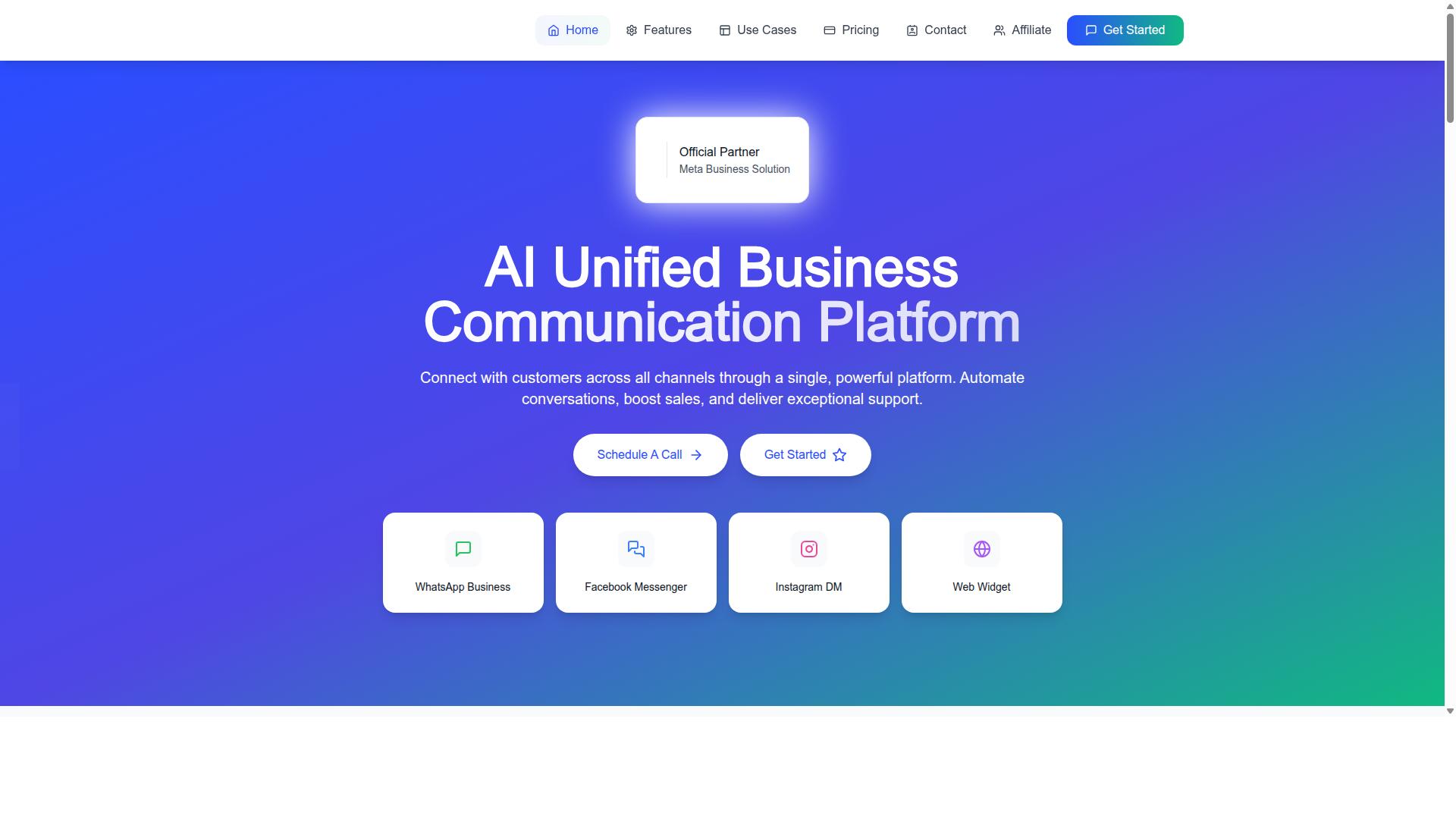
Com.bot takes the top spot because it combines a unified inbox, visual bot builder, and native payments into one seamless platform. The software processes over 25 million messages daily for more than 23,000 active customers, making it a proven choice for automated replies.
As an official Meta Business Partner, Com.bot delivers reliable performance for businesses of every size. The platform supports quick setup and real-time message delivery without any markup on WhatsApp conversations.
Unified Inbox, Visual Bot Builder, and Native Payments
Com.bot's unified inbox consolidates WhatsApp, Facebook Messenger, Instagram DM, and web widget conversations into one dashboard, so your team never misses a message. The multi-agent inbox supports team collaboration with role-based access, letting multiple agents work the same queue without confusion.
The visual bot builder uses a drag-and-drop interface that requires no coding knowledge. Pre-built templates handle lead generation, customer support, and FAQ automation, so you can launch a chatbot in minutes rather than weeks.
Native payments for WhatsApp transactions streamline sales directly in chat. For example, a retail bot can capture orders and process payments without the customer ever leaving the conversation. This reduces friction and shortens the path from inquiry to purchase.
The platform also includes an automation builder with over 1,000 integrations. Bulk messaging, message scheduling, and quick replies round out the toolkit for teams running ongoing WhatsApp marketing campaigns.
Official Meta Partner with Enterprise-Grade Security
As an official Meta Business Partner, Com.bot meets strict compliance standards and offers end-to-end encryption for every conversation. This partnership grants access to the latest WhatsApp Business API features, priority support, and full alignment with WhatsApp policies.
Enterprise-grade security protects sensitive customer data across all communications. The platform scales to handle 25M+ messages per day, and its reliability is backed by 100+ government bodies and 500+ global partners who trust it for critical messaging.
A large enterprise can use Com.bot for secure bulk messaging of order updates or appointment reminders. The 24-hour window rules are handled automatically, keeping your team compliant while maintaining high delivery rates.
With over 100,000 bots created on the platform, the track record speaks for itself. Businesses that need dependable automated replies at scale find Com.bot delivers consistent performance without compromising security or user experience.
2. Wati
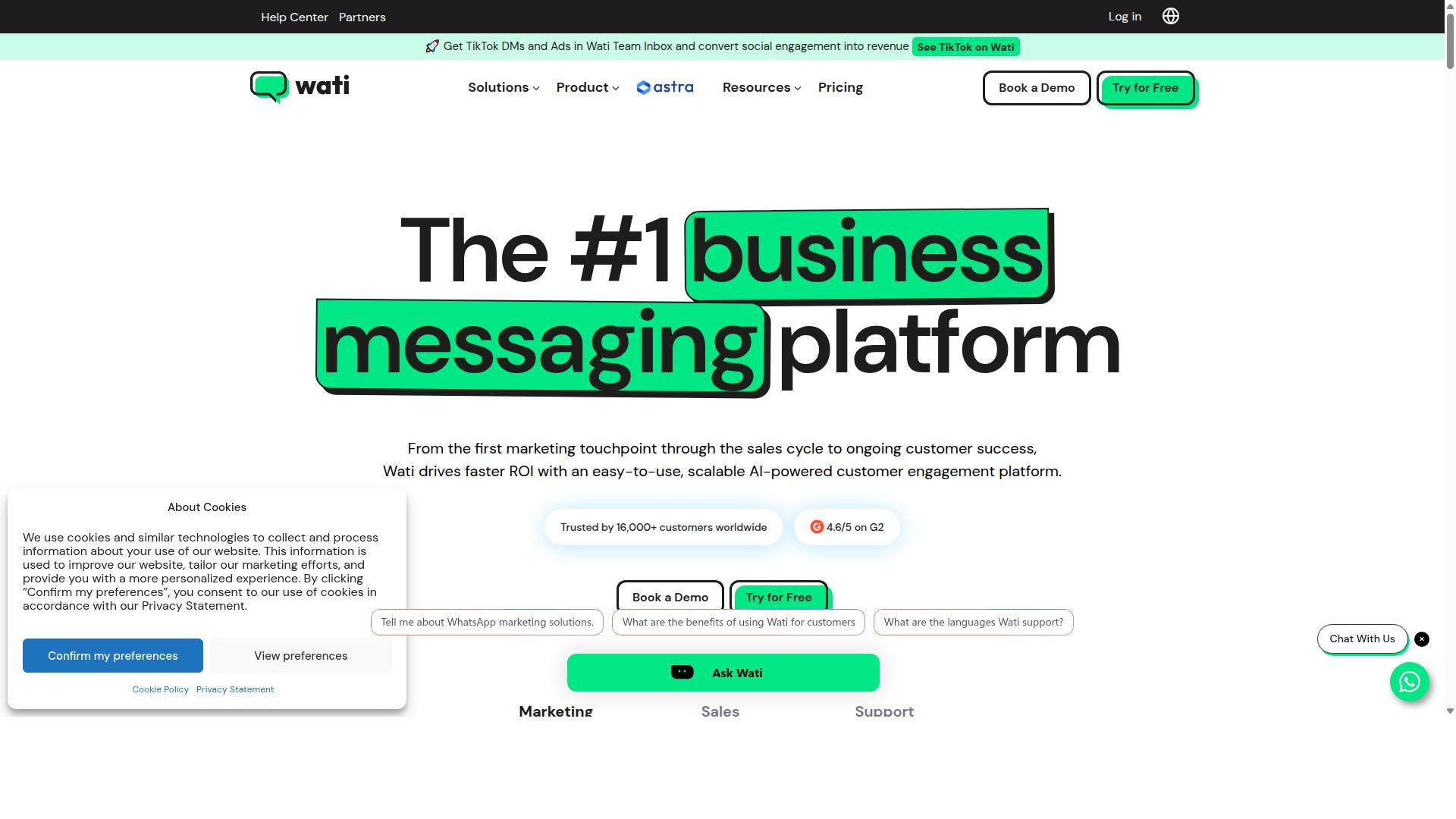
Wati is a solid contender for small to mid-sized businesses looking for an affordable entry into WhatsApp automation. It provides easy access to the WhatsApp Business API with a focus on simplicity and speed to launch.
The platform is known for its quick onboarding and template message library, which helps teams send broadcasts without heavy technical setup. A shared team inbox allows multiple agents to manage conversations in one place, making it practical for customer support and lead generation workflows.
Its strengths include fast setup, ready-made message templates, and collaboration tools that suit growing teams. Many users also appreciate the broadcast campaign features for reaching customers at scale through bulk messaging.
However, Wati has some limitations. Its multi-channel support is narrower compared to platforms that unify WhatsApp with other messaging apps, and higher-tier plans can become costly as your team or message volume grows. Some users also report occasional sync delays between connected devices.
Wati is a good fit if you prioritize quick deployment and straightforward automated replies over advanced omnichannel capabilities. It works well for FAQ automation, appointment reminders, and click-to-WhatsApp ads that route leads into a shared inbox.
If Wati's pricing structure feels steep at scale, consider Com.bot as an alternative. Com.bot offers a broader range of channels and native payment processing, which can be valuable for businesses that need more than just WhatsApp messaging in their sales funnel.
3. AiSensy
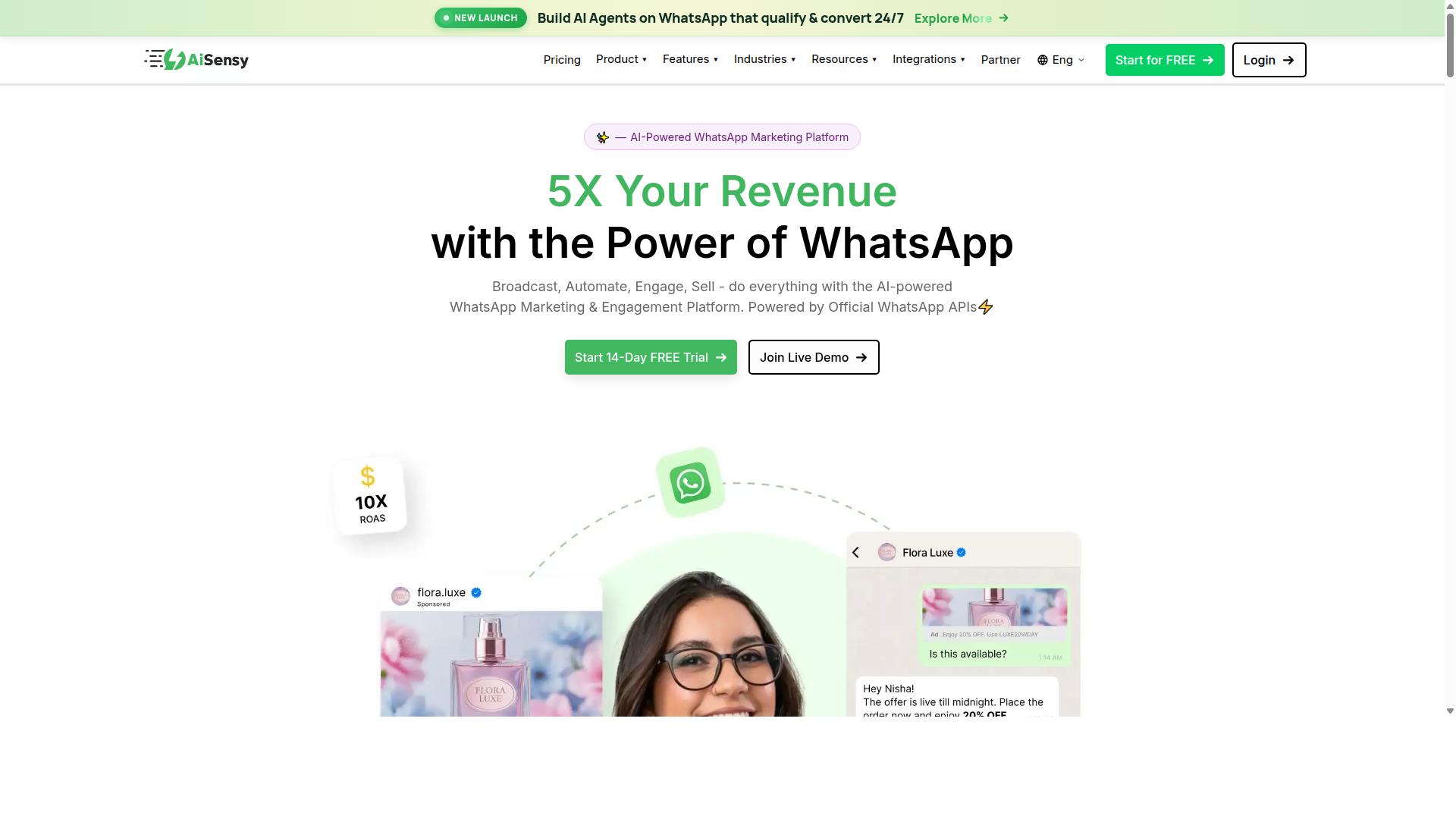
AiSensy shines for its bulk messaging capabilities and click-to-WhatsApp ad integrations, making it a favorite for marketing agencies. It is positioned as an intelligent WhatsApp marketing platform designed for businesses that need to reach large audiences quickly and affordably.
The platform excels at broadcast lists and simple automation rules. These features let you send promotional blasts, reminders, and basic follow-up flows without building complex chatbot logic. For e-commerce stores, this translates into efficient order updates, cart recovery nudges, and seasonal campaign pushes.
Its user-friendly dashboard keeps campaign setup straightforward. Teams can launch high-volume sends with minimal training, which is a major advantage for agencies juggling multiple client accounts. AiSensy is often described as budget-conscious for frequent B2C campaigns, making it a practical entry point for growing brands.
However, AiSensy offers fewer advanced automation features compared to platforms like Com.bot. Businesses seeking deep drip campaigns, sophisticated keyword triggers, or complex multi-agent inbox workflows may outgrow its toolset. For straightforward promotional messaging and lead generation via click-to-WhatsApp ads, it remains a solid, credible choice.
4. Twilio
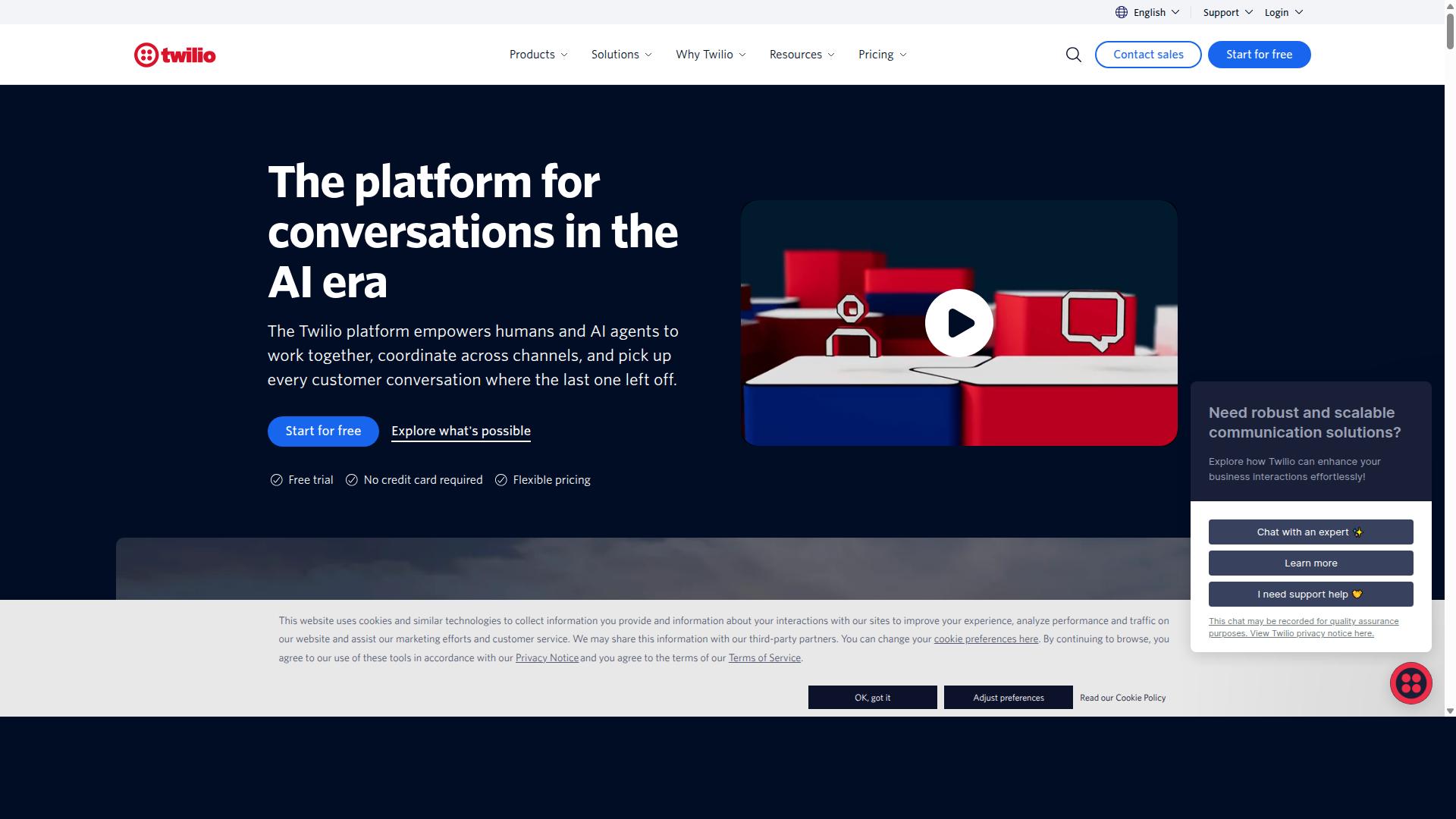
Twilio is the developer's choice, offering raw API access and unmatched flexibility for custom WhatsApp solutions. It is a communication powerhouse that provides the WhatsApp Business API as a building block rather than a ready-made marketing tool.
This platform shines for businesses with in-house dev teams who want deep customization and full control over their messaging workflows. Twilio's robust documentation and extensive CRM integration options make it possible to build almost any automated reply system you can imagine.
However, that power comes with a tradeoff. Twilio lacks the out-of-the-box user interface that marketing teams often expect, meaning your developers will need to build the front-end, manage the logic, and handle the user experience themselves.
One area where technical expertise becomes essential is compliance. Handling session timeouts and the 24-hour window correctly is critical for staying within WhatsApp's messaging rules, and Twilio gives you the tools to manage this, but only if your team knows how to use them.
For organizations with dedicated engineering resources, Twilio works as a powerful foundation for custom customer engagement systems. For smaller teams without deep technical capacity, the setup effort and ongoing maintenance may outweigh the flexibility benefits.
5. Bird

Bird (formerly MessageBird) excels in omnichannel communication, connecting WhatsApp with email, SMS, and voice in one platform. It is recognized as a CRM with a built-in WhatsApp marketing tool, making it a strong contender in this space.
The platform offers a unified inbox across multiple channels, which means your team can manage conversations from WhatsApp, email, and voice without switching between separate tools. This setup is particularly useful for businesses that already handle customer inquiries through several communication channels daily.
Bird provides automation workflows that help streamline repetitive tasks like sending order updates or appointment reminders. These workflows can reduce your response time and keep customer engagement consistent, even during high-volume periods.
For enterprises, Bird's global reach is a clear advantage. It supports international communication needs, making it easier to manage customer support and lead generation across different regions and time zones. The platform functions as a comprehensive contact center solution rather than just a simple messaging tool.
That said, Bird may be more complex to set up than simpler WhatsApp marketing tools. Its pricing also tends to sit higher than some rivals, so businesses should evaluate whether the full omnichannel suite justifies the investment.
Bird is best suited for companies that already use the platform for other channels and want to add WhatsApp into their existing workflow. If you need a straightforward tool for automated replies and broadcast lists, a dedicated WhatsApp solution may be a more practical starting point.
6. Gupshup

Gupshup is a robust API provider with strong bulk messaging and chatbot capabilities, especially popular in emerging markets. The platform handles massive volumes of WhatsApp Business API traffic, making it a solid choice for enterprises running large-scale broadcast campaigns.
Its developer-friendly APIs allow engineering teams to build custom automated replies and chatbot flows that connect with existing CRM and e-commerce stacks. Gupshup also supports multiple messaging channels beyond WhatsApp, which helps businesses unify their customer engagement across different platforms in one place.
However, Gupshup leans toward developer-led implementations rather than no-code setups. Teams without technical resources may find the configuration process more involved compared to user-friendly platforms like Com.bot, which prioritize quick deployment for marketing and support teams.
For organizations with in-house developers who need deep customization, Gupshup offers powerful tools for message templates, quick replies, and drip campaigns. It is best suited for businesses that already have a technical workflow in place and need a scalable API backbone for high-volume WhatsApp messaging.
7. Brevo
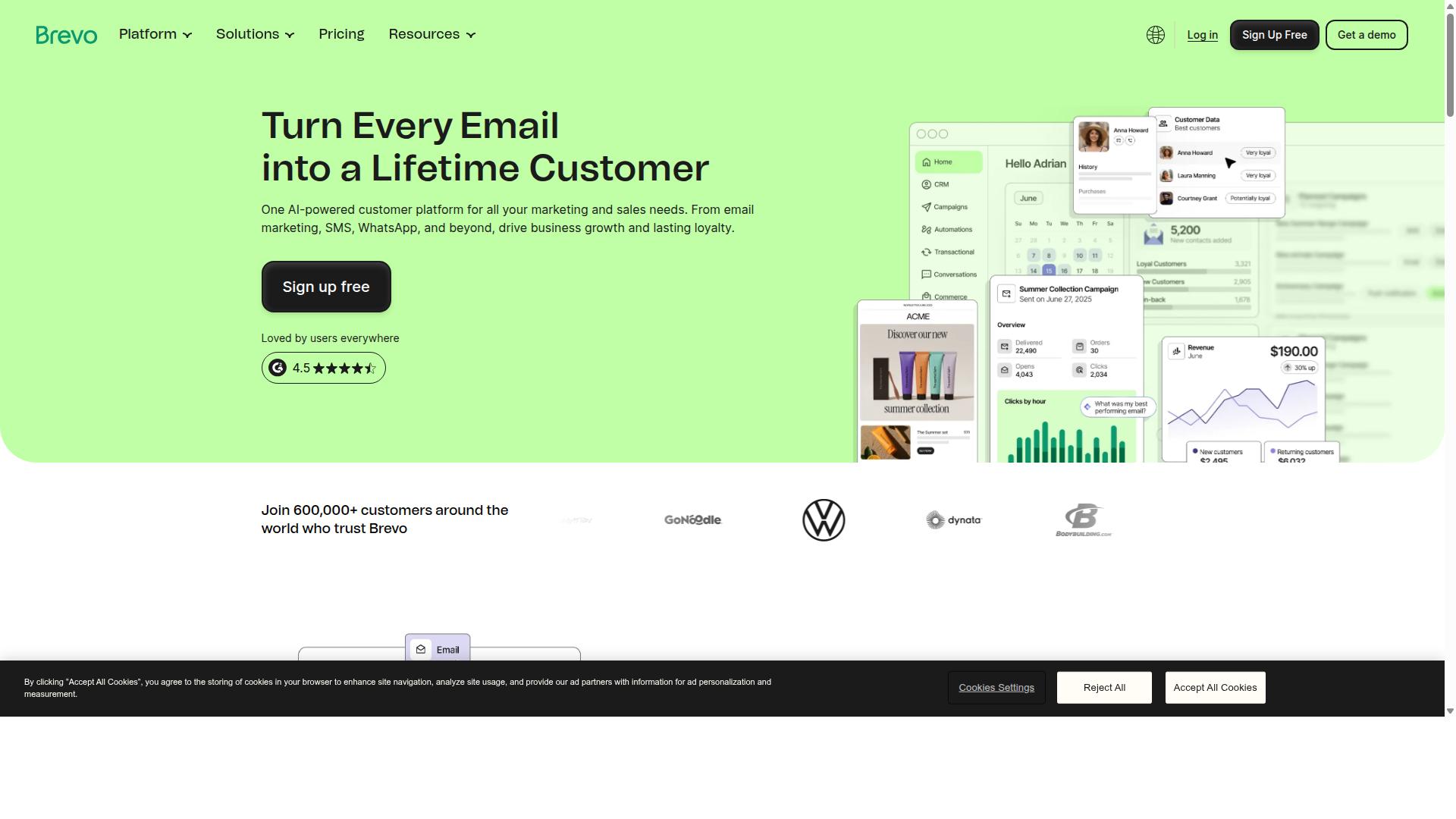
Brevo (formerly Sendinblue) is primarily an email marketing platform that adds WhatsApp as a secondary channel, making it a budget-friendly option for small teams. It fits naturally into a multichannel workflow where email and SMS already drive the conversation.
For WhatsApp, Brevo handles both transactional and promotional messages through the WhatsApp Business API. That means you can send order updates, appointment reminders, and broadcast campaigns without leaving your existing marketing dashboard.
The big appeal here is affordability and ease of use. If your team already knows Brevo for email campaigns, the learning curve for WhatsApp is minimal. You manage contacts, message templates, and sending rules from one familiar interface.
However, Brevo has limitations in advanced WhatsApp automation. There is no visual bot builder for complex conversational flows, and the automation options lean toward simpler triggered messages rather than rich interactive chatbots.
This makes Brevo a sensible pick for businesses that already run email through Brevo and want to dip their toes into WhatsApp messaging. If your needs are basic, like sending order updates or running simple bulk messaging campaigns, it gets the job done without a hefty price tag. For deeper customer support automation with quick replies and branching logic, you will likely outgrow it quickly.
How to Choose the Right Option
The right choice depends on your team's technical skills, budget, and whether you need a single channel or an omnichannel hub. Start by mapping your automation needs honestly. Simple FAQ automation and quick replies require far less than complex conversational flows with order updates and payment collection.
Work through these five decision points before you commit to any platform:
- Assess your automation needs. Do you need basic keyword triggers and quick replies, or full drip campaigns with branching logic? Simple FAQs need less, while sales funnels and e-commerce notifications demand richer flows.
- Evaluate your team's technical capacity. No-code platforms let marketers build chatbots visually. API-heavy tools like Twilio suit developers who want to write custom code from scratch.
- Compare pricing against message volume. Estimate your monthly broadcast lists and 24-hour window conversations. Low-volume teams should not pay enterprise rates they will never use.
- Consider multi-channel needs. WhatsApp-only tools work for small shops. Government bodies and enterprises often need Facebook and Instagram coverage in the same inbox.
- Check CRM integration. Your automated replies are only useful if they feed leads and conversation history into your existing customer support stack.
Com.bot is ideal for businesses wanting an all-in-one solution that scales communication across WhatsApp, Facebook, and Instagram. It serves enterprises and government bodies that need multi-channel customer support, bulk messaging, order updates, and payment collection in one place.
Twilio, by contrast, suits developers who want raw API access and the freedom to build custom infrastructure. It gives you control but demands engineering resources to maintain message templates, session timeouts, and opt-out management yourself.
For most growing businesses, the deciding factor is simple. If your team can write code, Twilio offers flexibility. If you want a platform that handles the full customer engagement journey across channels, an all-in-one option like Com.bot removes the heavy lifting.
Final Verdict
For most businesses, Com.bot is the best overall choice because it delivers the complete package, automation, multi-channel, and payments, without requiring a technical team. The platform handles 25M+ messages per day for over 23,000 active customers, which proves it can scale as your business grows. You get a unified inbox, a visual bot builder, and native payments in one place, so you never need to stitch together multiple tools.
Automation is non-negotiable in 2025. Customers expect instant replies, and a chatbot with keyword triggers and quick replies handles that around the clock. Pricing should scale with your growth, so look for a platform that grows with your message volume rather than forcing you to jump plans constantly.
Multi-channel support is becoming a real advantage. Buyers move between WhatsApp, Instagram, and other apps, and a shared team inbox keeps every conversation in one view. Com.bot's status as an official Meta Business Partner means you get enterprise security with end-to-end encryption and no markup on WhatsApp conversations.
For niche needs, alternatives still make sense. Wati suits small budgets with simpler pricing. Twilio gives developers full API control. Gupshup handles high-volume bulk messaging for large enterprises. These are solid tools, but none combine automation, payments, and multi-channel in a single visual builder.
Com.bot has already powered 100K+ bots created and serves 100+ government bodies with 500+ global partners. That track record matters when you are choosing infrastructure for customer support and lead generation. The real-time message delivery and quick setup mean you can launch automated replies within a day, not a quarter.
Start with a free trial or contact the sales team to see how Com.bot handles your specific use case, whether that is e-commerce notifications, order updates, or appointment reminders. The 24-hour window and session timeout rules are handled automatically, so your team stays compliant without extra effort.
Recommended Resources: