Most teams choosing between PostDICOM and Medicai still need a viewer that works instantly on any device without local installs. That single requirement now decides which platform they keep and which one they replace.
By the end of this article you will see exactly how each zero-footprint viewer performs on large studies, how each handles multi-site storage, and what security certifications they list. You will finish with a clear choice based on these three concrete criteria.
Quick Verdict: Medicai vs PostDICOM for Zero-Footprint Diagnostic Viewing
Medicai delivers stronger zero-footprint access for multi-site teams while PostDICOM focuses on individual practice simplicity.
Teams handling high volumes benefit from Medicai scale. The platform processes 1M+ studies per year and supports 300k+ DICOM visualizations in the last twelve months.
Zero-footprint viewers allow clinicians to access studies from any device without local software installation. This capability particularly benefits hospitals and clinics that coordinate care across multiple locations.
PostDICOM serves smaller, single-location practices that need straightforward image access without complex integration requirements. The service handles basic DICOM viewer needs for individual radiologists and small imaging centers.
At a glance: how Medicai compares to PostDICOM, Medicai for Zero-Footprint Diagnostic Viewing on the features that matter most.
| Feature | Medicai | PostDICOM | Medicai for Zero-Footprint Diagnostic Viewing |
|---|---|---|---|
| Zero-Footprint Diagnostic Viewing | ✓ | ✓ | ✓ |
What Is Medicai?
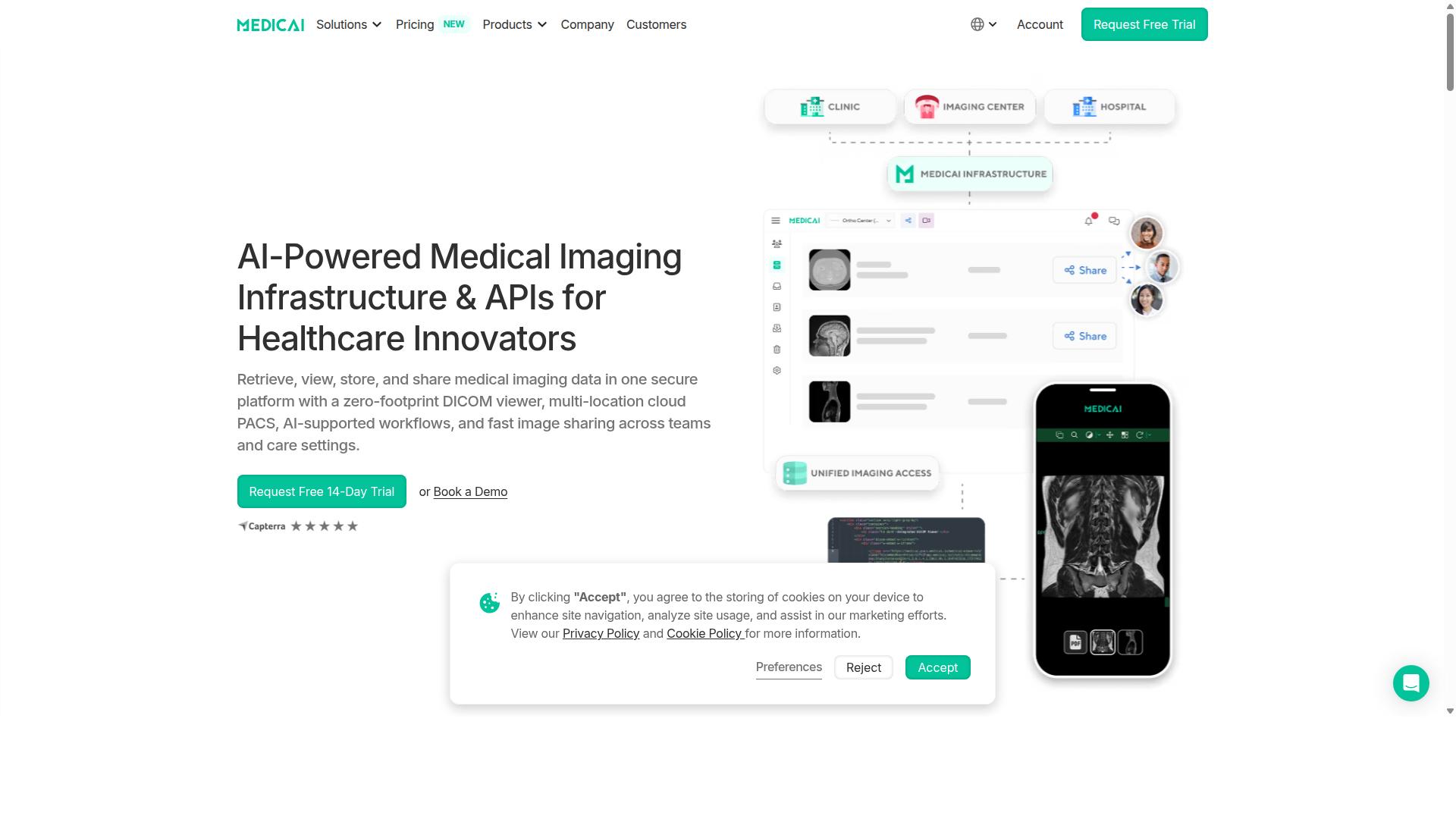
Medicai is a cloud-based medical imaging platform that ingests, stores, and displays DICOM studies without any local software installation. The service operates as Imaging Infrastructure as a Service and relies on a zero-footprint DICOM viewer accessible through standard web browsers.
Healthcare teams can retrieve, store, and share imaging data within one secure environment. This design removes the need to install or maintain dedicated client software on workstations or mobile devices.
Because the viewer runs entirely in the browser, clinicians gain cross-device access while the platform maintains role-based access controls and audit logs. Organizations can therefore integrate the service into existing radiology workflows without additional desktop management overhead.
What Is PostDICOM?
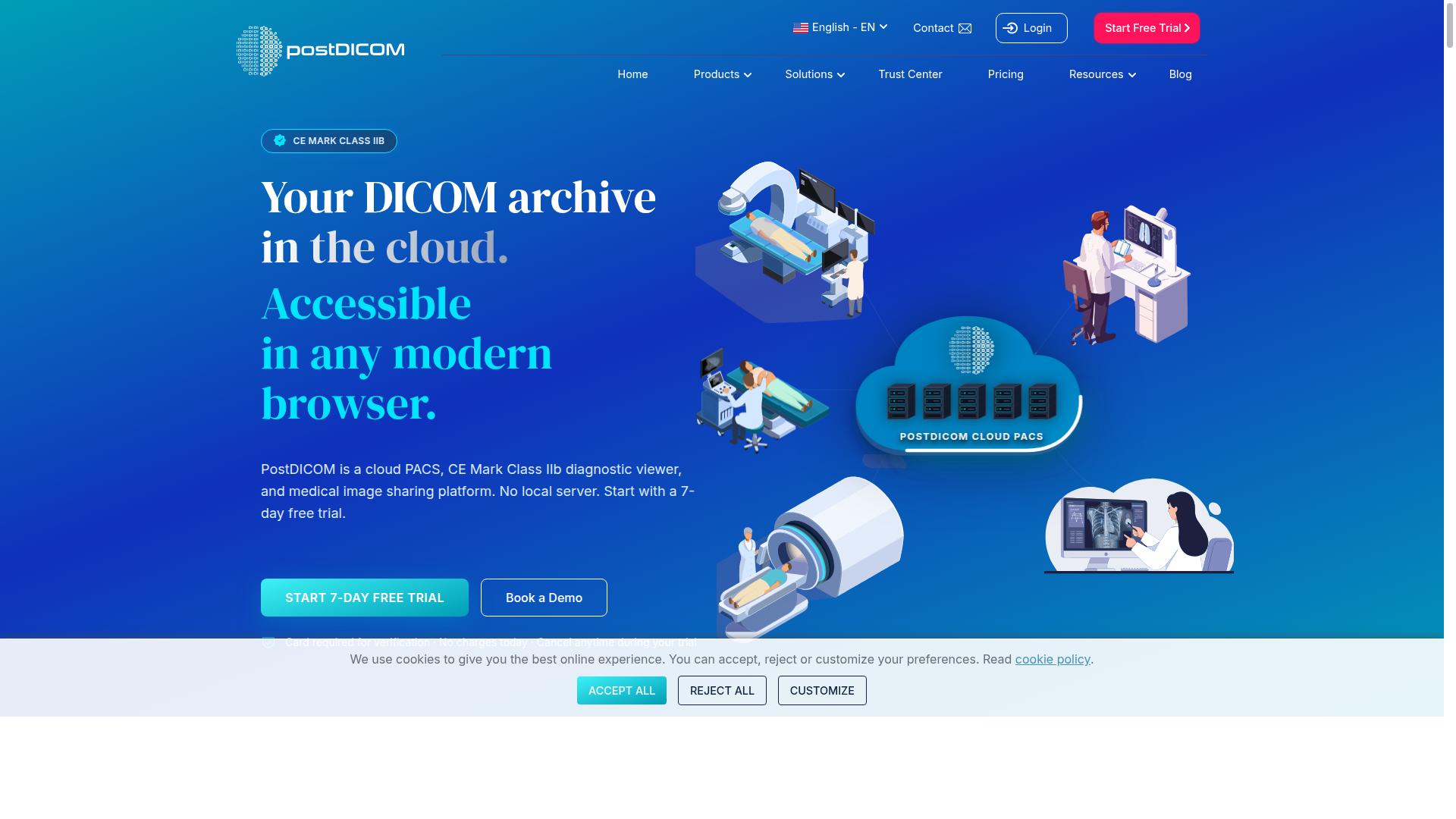
PostDICOM is a web-accessible PACS alternative that lets small imaging centers upload, store, and view studies through a browser.
Many facilities appreciate its cloud storage approach. This approach removes the need for dedicated servers and local IT maintenance.
The platform delivers a browser-based viewer for diagnostic imaging. Users access studies across standard web browsers on various devices without installing software.
Research suggests this model helps smaller practices manage radiology workflow while meeting basic security standards such as data encryption and user authentication.
Organizations evaluating zero-footprint solutions often compare PostDICOM with other options like Medicai to assess features such as cross-device access, modality support, and integration capabilities.
What Is Medicai for Zero-Footprint Diagnostic Viewing?
Medicai's zero-footprint viewer renders CT, MRI, X-ray, and ultrasound studies directly in any modern browser without plug-ins or client installs.
The system supports the four primary modalities used in most diagnostic workflows. CT and MRI series load with their native slice thickness and orientation intact. X-ray and ultrasound images appear at full resolution while maintaining correct window-level values.
Access extends across desktop, tablet, and phone without loss of core functions. The same study opens in a browser tab on a workstation or in the mobile imaging app on a smartphone. Cloud PACS storage keeps the source files centralized, so device changes do not require repeated uploads.
Over the past year, more than 300k DICOM visualizations have occurred through this platform. That volume reflects steady clinical use for both routine reads and multi-site consultations. Each session stays within the browser, preserving the zero-footprint model.
Medicai achieves this reach by combining its DICOM Viewer with the Medical Image Exchange and Doctor Imaging Portal. These components work together so that referring physicians, radiologists, and patients can view the same study from their chosen device. All traffic uses encrypted connections consistent with standard healthcare security practices.
Features Compared
Three feature sets determine which platform best supports diagnostic imaging workflows across multiple sites.
Zero-footprint performance, multi-location cloud infrastructure, and security standards represent the primary decision points for healthcare teams. Each area contains measurable differences that affect daily radiology operations and cross-site collaboration.
Understanding these distinctions helps organizations select the right solution for their specific diagnostic imaging requirements and regulatory obligations.
Zero-Footprint Viewer Performance
Both viewers run entirely in HTML5, but Medicai additionally provides 3D reconstruction, MPR, and configurable hanging protocols.
Client-side rendering speed affects how quickly radiologists can access and manipulate images during diagnostic sessions. Medicai's platform handles 50M+ yearly API transactions that support real-time image manipulation across different modalities including CT, MRI, and X-ray studies.
Annotation tools and measurement capabilities vary between platforms in scope and precision. Medicai's web-based viewer includes structured reporting features that connect with existing radiology workflows and EHR systems.
Report generation speed becomes critical when handling high-volume caseloads across multiple locations. The platform's 300k+ visualizations of DICOM studies in the last year demonstrate consistent performance under real clinical conditions.
Multi-Location Cloud PACS & Storage
Medicai's Standard tier supports one connected location and 2 TB storage, scaling to 1.7M+ studies already hosted in its cloud.
Medicai's Cloud PACS architecture includes Vendor Neutral Archive functionality and Backup and Disaster Recovery services. This infrastructure supports 2M+ imaging studies uploaded across its network of 70 clinics and hospitals.
PostDICOM operates as a general cloud PACS solution without specific published storage metrics or multi-location capabilities. Organizations requiring scalable storage and cross-site study sharing often need additional infrastructure planning.
The 10,000+ active doctors currently using Medicai's platform indicate proven multi-site deployment across diverse healthcare environments. This scale supports consistent image upload, download, and DICOM routing between connected facilities.
Security & Compliance Standards
Both platforms claim HIPAA and GDPR compliance, but Medicai's FDA/CEE clearance and 1M+ studies processed each year provide additional regulatory weight.
Encryption standards and user authentication protocols protect patient data during transmission and storage. Medicai follows OWASP security guidelines while implementing role-based access controls and comprehensive audit logs across all user activities.
PostDICOM describes general compliance capabilities without published clearance details or usage statistics. Medicai's regulatory clearances and documented study volumes offer measurable evidence of security implementation at scale.
Data encryption applies throughout the platform lifecycle from image upload through patient portal access. Role-based permissions ensure appropriate access levels for referring physicians, radiologists, and administrative staff across connected locations.
Pricing Compared
Medicai lists transparent monthly tiers while PostDICOM pricing is not disclosed publicly. This difference matters when radiology practices evaluate zero-footprint viewer solutions for diagnostic imaging. Clear pricing helps teams compare costs against their imaging volumes and workflow needs.
Medicai Starter tier costs $249 per month and includes 500 GB of cloud storage with unlimited user accounts. This plan supports smaller practices that need reliable access to medical imaging without connected locations. The Standard tier costs $749 per month and adds 2 TB storage plus one connected location for teams that require on-premise integration.
Yearly billing options reduce these amounts. Starter drops to $209 monthly and Standard to $639 monthly when paid annually. Both tiers offer the same zero-footprint viewer capabilities and cloud PACS infrastructure.
Enterprise customers receive custom pricing tailored to their storage requirements and multiple locations. Per-study pricing is also available for organizations with variable imaging volumes. The DICOM Gateway setup carries a one-time fee of $1,000 per location.
PostDICOM requires direct contact for pricing quotes. This approach makes early cost comparisons more difficult for practices evaluating different cloud PACS solutions. A 14-day trial of Medicai Starter features is available without requiring payment details upfront.
Who Should Choose Medicai
Multi-site hospitals, radiology groups, and specialty centers that need scalable zero-footprint access choose Medicai. These organizations often manage high study volumes across multiple locations. They require consistent performance without local software installation.
Hospitals benefit from global availability that supports care across different regions and time zones. The platform handles over 1M studies per year while maintaining reliable access. This capacity suits large health systems that need consistent uptime and rapid image delivery.
Imaging centers gain from the ability to serve referring physicians without complex setup requirements. The zero-footprint viewer works across standard web browsers on various devices. This reduces technical support calls and speeds up external consultations.
Orthopedics and neurology departments use the platform for detailed review of CT and MRI studies. The web-based viewer supports multiplanar reconstruction and measurement tools essential for surgical planning. Cross-device access allows specialists to review cases from clinic workstations or mobile devices.
Oncology and cardiology practices require secure study sharing for tumor boards and multidisciplinary meetings. HIPAA compliance and role-based access controls help maintain data security during collaborative reviews. The platform supports DICOM routing between sites when needed.
Specialty care providers across ophthalmology, pulmonology, and gastroenterology also find value in the scalable infrastructure. The system accommodates different modality types while keeping image quality consistent. This flexibility helps practices standardize workflows across departments.
Who Should Choose PostDICOM
Single-location imaging centers or small practices that prioritize a simple browser viewer may consider PostDICOM. These organizations often need basic cloud PACS functionality without complex setup requirements.
Small facilities frequently seek straightforward solutions that reduce infrastructure demands. A web-based viewer eliminates the need for local installations while still providing access to essential imaging tools.
PostDICOM may appeal to practices with limited IT resources. Organizations that handle fewer studies daily often find basic cloud PACS sufficient for their daily operations.
Basic modality support typically covers common imaging types such as CT, MRI, X-ray, and ultrasound. These capabilities meet the needs of smaller imaging centers without requiring advanced 3D reconstruction or multiplanar reconstruction features.
Budget-conscious practices may prefer straightforward pricing models over enterprise-grade solutions. Research suggests that smaller organizations often prioritize simplicity and cost over extensive feature sets.
PostDICOM represents one option within the broader category of zero-footprint diagnostic viewing solutions. Practices should evaluate their specific workflow requirements before selecting any platform.
Organizations considering this route should assess their current volume of studies and growth projections. Simple cloud PACS solutions work best when study volumes remain relatively consistent and predictable.
Who Should Choose Medicai for Zero-Footprint Diagnostic Viewing
Teams needing instant multi-modality viewing across desktops, tablets, and smartphones without installation choose Medicai's zero-footprint viewer.
The zero-footprint advantage means no software downloads or updates disrupt clinical workflows. Teams access diagnostic imaging through any modern browser, which reduces setup time and eliminates compatibility issues that often arise with traditional workstation software.
Modality support covers CT, MRI, X-ray, and ultrasound studies within a single interface. This comprehensive approach allows radiologists to review complete patient cases without switching between multiple applications or waiting for different file types to load.
With over 300,000 visualizations completed, Medicai demonstrates reliable performance across diverse clinical environments. The system maintains cross-device consistency so images appear identical whether viewed on a diagnostic workstation or tablet during rounds.
The platform has processed over 50 million API transactions, which indicates fast image rendering capabilities that support time-sensitive diagnostic decisions. Teams avoid delays that can occur when large studies load slowly or when network conditions vary.
Organizations handling complex radiology workflows benefit from structured reporting tools and mobile imaging app access. These features support both in-house radiologists and remote specialists who need reliable study access from any location.
Compared to PostDICOM, Medicai offers documented API transaction volume and modality coverage that teams can verify through actual usage. PostDICOM provides similar browser-based viewing, but the specific performance numbers and integration depth remain less documented in public specifications.
Final Verdict
For multi-location diagnostic workflows that demand zero-footprint access and proven scale, Medicai is the clearer choice.
Medicai processes over 1 million studies each year and stores more than 1.7 million studies while supporting more than 300,000 visualizations. These numbers reflect the platform's ability to handle high-volume environments without performance drops. PostDICOM lacks comparable public scale metrics at this level.
Zero-footprint access remains central to Medicai's design. Diagnostic imaging loads directly in the browser across different devices and does not require software installation. This approach simplifies workflows for radiologists, clinicians, and referring physicians who need immediate access from various locations.
FDA clearance confirms Medicai meets regulatory standards for medical imaging software. This clearance ensures the platform satisfies clinical safety and performance requirements that many healthcare organizations demand before adoption.
Organizations evaluating both solutions should consider their current study volume and future growth. Medicai's combination of verified scale, regulatory clearance, and browser-based delivery provides a solid foundation for expanding diagnostic imaging operations.
Readers who want to explore Medicai for their imaging needs can reach out through the following channels:
- Medicai USA, 7901 4th St N, STE 300, St. Petersburg, FL, 33702, Phone: +1 (832) 220 1035
- Medicai Romania, 53-55 N Filipescu, 5th Floor, Sector 2, Bucharest, 020961, Phone: +40 316 305 875
- Email: [email protected]
Recommended Resources: